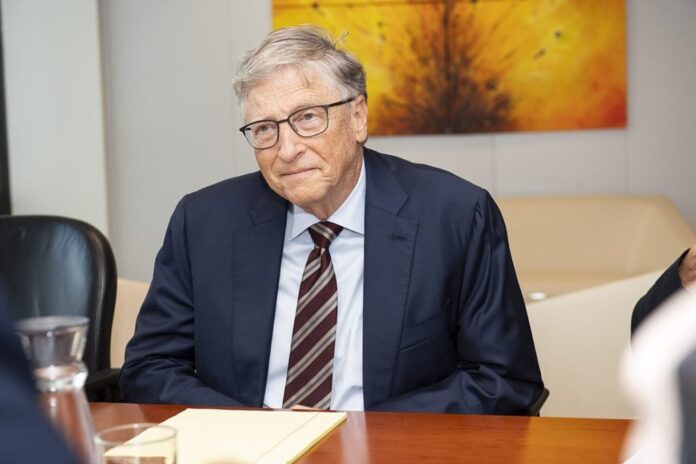
Microsoft cofounder Bill Gates canceled his keynote at the AI Impact Summit in New Delhi just hours before he was scheduled to appear, forcing organizers to make a last-minute program change.
In a statement shared with Skift Meetings, the Bill & Melinda Gates Foundation said it made the decision to ensure the event remained focused on its core priorities.
“After careful consideration and to ensure the focus remained on the AI summit’s key priorities, Mr. Gates did not deliver the keynote address. The Gates Foundation was represented by Ankur Vora, president of Africa and India offices, who spoke at the summit,” the foundation said. “The Gates Foundation remains fully committed to our work in India to advance our shared health and development goals.”
Vora ultimately delivered remarks in Gates’ place.
Gates had been in India ahead of the event and posted a photo on X two days earlier with N. Chandrababu Naidu, chief minister of Andhra Pradesh. As recently as February 17, the foundation’s India office confirmed on social media that Gates would attend and deliver the keynote as scheduled.
Speculation and Reputational Risk
The sudden change also drew attention to broader reputational risks tied to high-profile speakers.
The cancellation came amid renewed public attention surrounding Gates’ past associations with Jeffrey Epstein, who pled guilty in 2008 to soliciting prostitution from a teenage girl. He died in jail in August 2019 while being held on multiple charges, including sex trafficking.
Emails previously released by the U.S. Department of Justice reveal contact between Gates Foundation staff and Epstein. Gates has previously said his interactions were limited to discussions about philanthropy and described meeting Epstein as an “error of judgment.”
Gates was not the only high-profile speaker to cancel. Nvidia CEO Jensen Huang withdrew days before his scheduled AI Impact Summit appearance, citing illness as the reason.
AI Impact Summit Not an Isolated Case
The AI Impact Summit joins a growing list of high-profile speaker disruptions that have forced planners to pivot quickly.
In June 2024, actor and Ted Lasso creator Jason Sudeikis failed to appear as a featured speaker at the Society for Human Resource Management (SHRM) Annual Conference & Expo in Chicago. Photos later surfaced showing him attending a WNBA game instead. NBC’s Al Roker ultimately stepped in to interview SHRM board chair Betty Thompson before an audience of 26,000 attendees at McCormick Place Convention Center.
Industry experts say such incidents reinforce the need for contingency planning.
“The world is an unpredictable place. Having a secondary plan in place has never been more important,” said Jaki Baskow, CEO of Las Vegas Speakers Bureau.