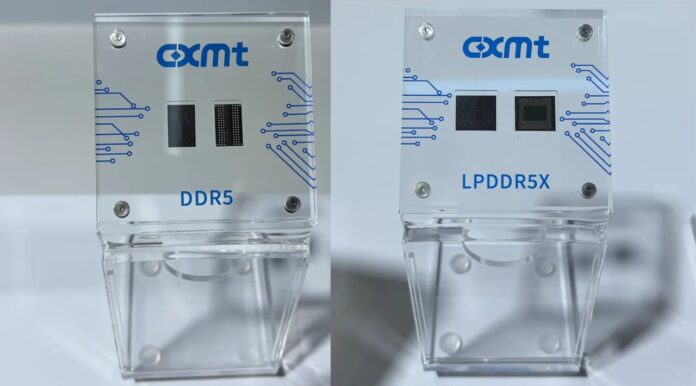
The memory market is under pressure because the artificial intelligence industry is generating very high demand for memory. Production by Micron, SK Hynix, and Samsung is unable to meet this demand, and prices are rising while adjustments must be made at all levels, even in the consumer graphics card sector. Until now, we had hoped that Chinese manufacturers CXMT and YMTC would come to the market’s rescue, but it seems we cannot count on them.
Are CXMT and YMTC unable to become major producers?
The main reason preventing these two companies from becoming major producers is their production method. China does not have access to EUV production methods and must rely on alternative means to produce their DDR5. Unfortunately, these methods are not as efficient, resulting in larger dies on wafers (40 to 50% larger than those of Korean players) and therefore lower yields. In a market where production costs and volume matter, this is a significant disadvantage.
Furthermore, the bulk of these companies’ supply is already absorbed by local Chinese demand. Broadly speaking, these companies do not have large volumes available for export… And even if they did, these companies’ lack of experience makes potential customers wary. But this point needs to be qualified, as HP seems to be considering adopting Chinese solutions.
In terms of pricing, CXMT and YMTC do not have particularly aggressive pricing policies. Recent rumors that memory chips were being sold below market prices have been denied. In fact, the opposite is true, as these companies are seeking to align their prices with those of Korean players.
Furthermore, although this mainly concerns the Americans, it should be noted that YMTC is on the US blacklist of companies because the Chinese firm has worked with Huawei and the Chinese military. The case of CXMT is different, but the company is listed in section 1260H, limiting its commercial interest to the risk of government intervention.
In short, the vision of a Chinese savior is not about to become a reality. The two leaders in the field do not yet have the capacity or economic power to become major players. But in this field, things are moving very quickly, and if China manages to equip itself with EUV production facilities, the situation could change dramatically. Despite the sanctions, they have still managed to assemble a prototype EUV machine.